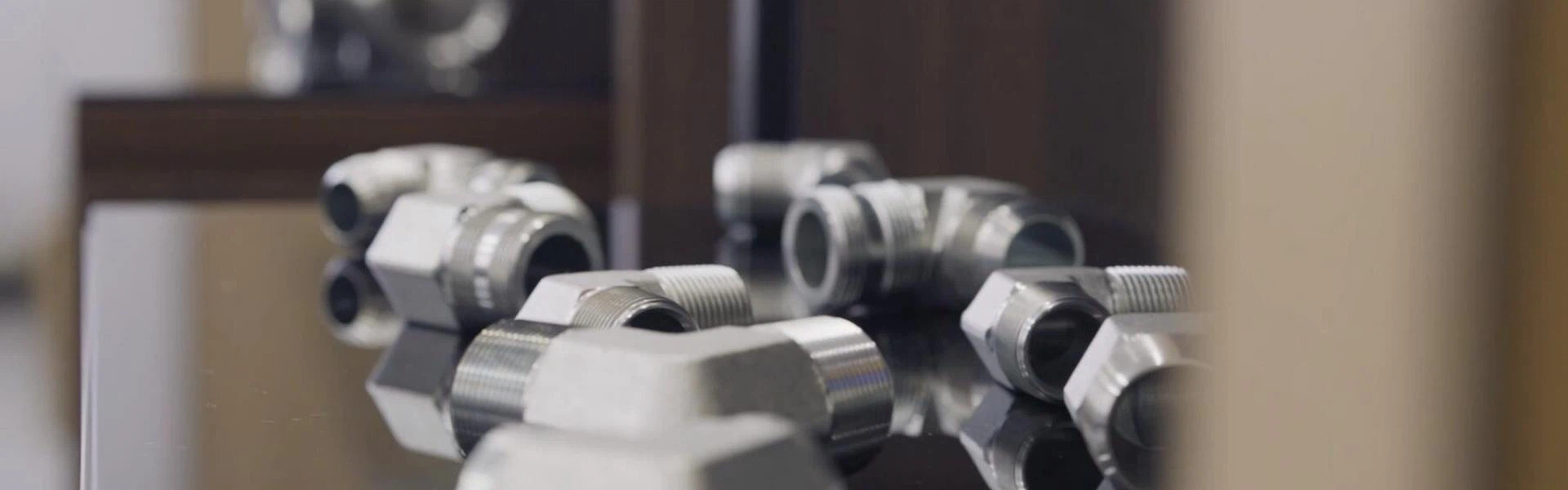
Caps And Plugs

Why Choose Us?

High Standard Products

Founded in 2004, NINGBO NJ HYDRAULIC ADAPTER CO.,LTD specializes in manufacturing hydraulic adapters, hydraulic fittings, hose fittings, flange adapters, split flange kits, reusable hose fittings, ferrules, caps & plugs, nuts and sell to worldwide.

Custom Service

Our history of collaboration with our customers for specially designed hydraulic applications, has established NJ hydraulic adapter as an industry-preferred source for customer-specific manufactured adapters.


Wide Range of Applications

We are proud to serve major markets including: Construction, agriculture, mining, industrial equipment and more.


Large Inventory

NJ have large inventory for storage adapters and fittings in 10000 SMQ. From the time we receive your order until it arrives at your facility, we're committed to meeting your deadlines and delivery requirements.


First 12 Last 1/2

 
Male NPTF Plug


外螺纹 NPTF 插头

What is Male NPTF Plug?


Male NPTF Plugs are forged from carbon steel and include a zinc-trivalent anti-corrosion layer for enhanced durability. They employ a National Pipe Thread (NPT) design with tapered threads for improved sealing. Both male and female thread variants are available.


Benefits of Male NPTF Plug

Male NPTF Plugs are designed to provide a secure closure for an opening in an industrial environment. They are easy to install, reliable and can help protect from external elements like dust, moisture and air.


High durability

Male threaded caps are made with high-quality materials that ensure durability and long-term performance.


Versatility

Depending on the application needs, there are various types of male threaded caps available in different sizes and materials.


Easy to install

Male threaded caps can be installed with basic tools like a wrench or a ratchet, simply by screwing them into the pre-cut hole.


How Male NPTF Plug Threads Work?


Crests of the threads are crushed against the mating thread roots when assembling NPTF threaded components. This crushing is in addition to the interference fit provided by the thread taper wedging the thread flanks together. Like NPT connections, tapered threads hold NPTF connections together. And these connections are solid and tight. Crushing the thread crests fills the potential spiral leak path in NPT connections. Filling this leak path is why NPTF connections do not generally need thread sealants and why NPTF is considered a dryseal connection.


The Male NPTF Plug thread design uses truncated thread roots. Truncated thread roots provide an interference fit so that the thread crests crush against the opposing thread roots. Because of this, you should generally not reuse NPTF threaded fittings. Despite this best practice recommendation, reuse of NPTF threaded fittings sometimes happens. NPTF reuse requires careful inspection for thread distortion and proper thread engagement, plus the use of a thread sealant for a leakproof seal. Never reuse NPTF fittings for flammable and combustible gases or liquids service or systems carrying hazardous and aggressive gases or liquids.


Why are NPT and Male NPTF Plug threads tapered?

The tapered design of NPT and NPTF (National Pipe Thread Fuel) threads creates a tighter seal as the fitting is threaded deeper into the pipe. This is an important feature when dealing with liquid and gas flowing systems since it helps to prevent leaks. This design is particularly important in fluid transfer parts of systems where leaks can be dangerous or costly.


The taper on NPT and NPTF threads creates a mechanical interlocking effect between the fitting and the pipe. As the fittings and pipe are screwed together, the threads compress slightly as they are threaded deeper into the pipe, creating a tighter seal.


Materials of Male NPTF Plug
 

Male NPTF Plugs are manufactured in several types of metal because they are used in many different applications with pipes made of many different materials. When choosing a pipe plug, select one made of the same material as the pipe or one made of a material with desirable properties.

Commonly used materials include

Low carbon steel: This is hard and durable enough for most low-pressure applications.
Stainless steel: A strong and corrosion-resistant metal comprising iron, carbon, and varying quantities of chromium.
Alloy steels: Available in many different varieties. They are harder and more durable than low carbon steel.
Aluminum: Ideal for use with aluminum pipes and where lower weights are a priority. However, uncoated aluminum may corrode more quickly in the presence of other metals, including iron and brass. It is also weaker than steel and should not be used in high-pressure environments.
Brass: An alloy of zinc and copper. It is widely used in plumbing fasteners. Brass is malleable, highly resistant to corrosion, and suitable for moderately high temperature environments such as hot water pipes.


Can You Reuse Male NPTF Plugs?
 

The National Pipe Taper Fuel (NPTF) standard is designed to provide a better seal than the NPT. The NPTF thread is commonly referred to as a dry seal thread which is designed to work optimally without the use of lubricants or PTFE tape. The differences in thread are with the major and minor diameters as well as the root and crest of the threads. NPTF and NPT threads call for a similar crest though the NPTF crests have a smaller range.


NPTF threads are designed to crush the thread producing a mechanical seal. As the fittings is seated, the male thread cuts into the female threads forming the seal. For this reason, Male NPTF Plugs are not reusable. Though the same function does not happen with NPT fittings, it is not recommended that NPT fittings be reused. Overtightening is common, particularly when a fitting is reused, which can cause galling or increase the likelihood of leakage.


Application is the main factor used to determine the use of NPTF or NPT. When the application is critical and a sealing compound may fail due heat or high pressure NPTF threads are typically recommended. It is not recommended that NPT and NPTF threads be used interchangeably as this will compromise the seal of the threads creating the potential for leakage.


JIC Hydraulic Caps


What is JIC Hydraulic Caps?

JIC Hydraulic Caps is designed with female UNF thread and 37 degree seat, two types of JIC caps, one is two piece including nuts and plugs with 37 degree seat, another is caps with 37 degree seat. JIC plug and cap sizes meet ISO 8434-2 and SAE J514 standards.

JIC 液压盖


Benefits of JIC Hydraulic Caps

JIC Hydraulic Capss offer many of the same advantages as other fittings and seals as well as additional unique benefits.

Universal & Affordable
The simplicity and affordability of manufacturing JIC fittings—as well as the wide range of size and style options—have made them the industry standard for hydraulic fittings for decades. JIC fittings now come in a multitude of variations that are easy to adapt to both imperial and metric, allowing them to fit virtually any hose or port and making them universally accepted by both foreign and American companies.

High/Low Temperature Performance
JIC fittings perform exceptionally well in high- and low-temperature environments. The metal-to-metal seal found in JIC fittings is not affected by temperature like O-rings are, since O-rings are typically made of rubber or some other elastomer material that can handle exposure to a milder range of temperatures.

Connectivity
Beyond the versatility that allows JIC fittings to be connected to virtually any hydraulic system, JIC fittings can also be disconnected (and later reconnected) without loss in performance, further explaining how they came to be an industry standard.


How to Measure JIC Hydraulic Caps?

Diameter

When it comes to measuring the diameter of JIC fittings, precision is key. Utilize calipers to measure the outer diameter of the male thread or the inner diameter of the female thread. This step is crucial for ensuring that the fitting will properly connect with its corresponding component, thereby preventing any potential leaks or system failures.

Thread Count

Thread count is another vital metric. To determine the thread pitch, count the number of threads within an inch. This information is essential for compatibility, especially when you're dealing with high-pressure hydraulic systems where even a minor mismatch can lead to significant issues.

Flare Angle

The flare angle is a defining characteristic of JIC fittings. Use a specialized angle gauge to confirm the 37-degree flare angle. This is especially important in high-pressure applications where a secure, leak-proof connection is paramount.


How to Install JIC Hydraulic Caps?

Installing JIC fittings is relatively easy, but it does require some special tools. Here's how to install JIC fittings:

Cut the hose to the desired length.

1

>>

Slide the nut onto the hose.

2

>>

Slide the fitting body onto the hose.

3

>>

Insert the hose into the fitting body until it bottoms out.

4

>>

Reinforce the nut using a wrench until it's tight.

5

>>

Use a JIC fitting tool to tighten the nut to the correct torque.

6


What Size Thread Does JIC Hydraulic Caps Have?

Inch size

Dash size

Male Thread O.D. (in)

1

-16

1.31

1 1⁄4

-20

1.63

1 1⁄2

-24

1.88

2

-32

2.50


Our Factory


Founded in 2004, NINGBO NJ HYDRAULIC ADAPTER CO.,LTD specializes in manufacturing hydraulic adapters, hydraulic fittings, hose fittings, flange adapters, split flange kits, reusable hose fittings, ferrules, caps & plugs, nuts and sell to worldwide. We are proud to serve major markets including: construction, agriculture, mining, industrial equipment and more.

产品类别-1-1


NJ have large inventory for storage adapters and fittings in 10000 SMQ. From the time we receive your order until it arrives at your facility, we're committed to meeting your deadlines and delivery requirements. Our goal is to provide your fittings as fast as possible - when and where you need them - which also helps you keep your Whether you have an emergency or an ongoing need, send us an email. We deliver the fittings you want, along with the quality, service and competitive price you deserve.

productcate-1-1

productcate-1-1

productcate-1-1

productcate-1-1


Our Certificate


productcate-1-1

productcate-1-1


Ultimate FAQ Guide to Caps And Plugs
 

Q: Why are JIC Hydraulic Caps Important?

A: JIC Hydraulic Capss are essential components in hydraulic systems because they offer reliable and leak-free connections. Easy installation helps save both time and money. Furthermore, their metal-to-metal seal makes JIC fittings an excellent option for high pressure applications - common among hydraulic industry operators.

Q: How do JIC Hydraulic Caps Work?

A: JIC Hydraulic Caps work by creating a metal-to-metal seal between their components. Their 37-degree flare angle creates an effective seal, ideal for high pressure applications. JIC fittings consist of two parts: The fitting body and its matching nut, both featuring 37-degree flare angles on their ends; when tightening their respective nuts compress the flare against each other to form an airtight seal against one another and tightening creates a tight seal against its components.

Q: How to Install Metal JIC Hydraulic Caps?

A: Installing metal pipe plugs is a straightforward process that only takes a few tools.
Depending on the plug's head or drive type, ensure you have the correct wrench or drive tool to install the plug.
Before connecting the plug to the pipe, it is common practice to apply some sort of thread sealant (like specialized tape or thread compound) to fortify the connection.
After applying the thread sealant, twist the plug into place and tighten it with the corresponding installation tool.

Q: Is the Male NPTF Plug suitable for different tools and situations?

A: Male NPTF Plugs have a screw drive on the end opposite the threads. The drive mates with appropriately shaped tools to allow the plug to be screwed into position. Pipe plug screw drives are available in many types and sizes suitable for different tools and situations.

Q: How to measure Male NPTF plugs?

A: Selecting a pipe plug of the correct size can be challenging because of inconsistencies in the pipe thread size designations and pipe plug sizes. It is not possible to find the correct pipe plug size by simply measuring the outside or inside diameter of the pipe and selecting a matching part.
To find the correct pipe plug for your pipe, follow these simple steps:
Measure the pipe's inside diameter.
Use a thread chart to determine the thread's nominal size.
Measure the thread diameter and subtract 1/4 inch to find the nominal pipe size.

Q: When should you use a male NPTF plug?

A: Male NPTF plugs are suitable for most applications in which plumbers need to end-stop a pipe. They are convenient, durable, and easy to install and remove with widely available tools. However, pipe plugs require an internally threaded pipe, which may not always be available. Where threads are not available, plumbers often solder unthreaded caps, particularly on domestic copper piping. In industrial plumbing scenarios with large pipes, butt welded or socket welded pipe caps may be used instead of threaded plugs. Correctly welded caps are very strong, but they are permanent and require special equipment to install.
KOO

Q: What's Different About NPT and Male NPTF Plug Threads?

A: Both NPT and NPTF have the same pipe taper from their center axis, which gives the internal and external threads a cone shape. This taper means the ends of external threads are narrower at the end. They mate with and screw into the larger diameter open end of internal threads where they are widest. Thread standards define the NPT and NPTF taper as a taper rate of 3/4 of an inch per foot, 1/16 inch per inch of length or about 1 degree, 47 minutes, 24 seconds (1.7899 degrees).

Q: Why are NPT and Male NPTF Plug threads tapered?

A: The taper of NPT and NPTF connections causes the threads to wedge together during installation. This wedging creates a strong connection that will not vibrate loose. Slight differences between NPT and NPTF threads and thread wear from reuse determine when these connections require thread sealant to get a leakproof seal.

Q: What you should know when use Male NPTF Plug?

A: There are important issues regarding the installation, mixed-use, and reuse of NPT and NPT fittings:
NPT and NPTF fittings can be mixed but this requires using thread sealants.
NPT and sometimes NPTF fittings can be reused but only under particular conditions and cautions.
NPT and NPTF fittings both have special installation and assembly requirements for leakproof seals.

Q: Male NPTF Plug: What is the difference between MPT and NPTF?

A: Male national pipe thread (MNPT) is the male version of NPT pipe thread, sometimes abbreviated as MPT or NPT(M). Female pipe thread (FPT) is the female version of NPT pipe thread, sometimes abbreviated as NPT(F).

Q: How do you test a thread gauge for Male NPTF Plug?

A: For NPT threads there is only one test required. Thread the L-1 gage onto or into the tapered thread until the fit is hand tight. When the gage stops, the notch on the plug gage or the flat of the ring gage, should be within plus or minus one turn from the entry face of the thread.

Q: JIC Hydraulic Caps: What is the difference between NPT and JIC?

A: JIC Hydraulic Caps feature a 37-degree flare, while NPT pipe fittings have tapered threads. The former offers a metal-to-metal seal, whereas the latter relies on the taper to create a tight fit.

Q: JIC Hydraulic Caps: What's the difference between JIC and an fitting?

A: AN is produced to an extremely tight tolerance standard. JIC was standardized at a more attainable tolerance level to keep manufacturing costs and difficulty down. This means that a system that uses the AN standard may suffer if tolerances are too loose.

Q: Is JIC Hydraulic Caps metric or standard?

A: Thread Type: JIC fittings typically have Unified National Fine (UNF) threads, while JIS fittings have metric threads. This means that JIC fittings may require different tools and adapters than JIS fittings when installing or repairing hydraulic systems.

Q: How tight should JIC Hydraulic Caps be?

A: Thread the hose end or adapter nut onto the fitting until it cannot be tightened by hand any further. Lightly tighten the nut with a wrench (approximately 30 in. lbs.) making sure it does not bind; this is also known as tightening until wrench resistance.

Q: How can you tell the difference between a JIC Hydraulic Caps and SAE fitting?

A: SAE and JIC Hydraulic Caps are similar in that they are both flared fittings. However, they are not the same, and the primary difference is their seat angles. While SAE flare fittings have a 45-degree angle, JIC flare fittings have a 37-degree angle.

Q: How to stop JIC Hydraulic Caps from leaking?

A: Tighten the nut by hand until it bottoms the seats.
Using a marker, draw a line lengthwise on the nut and extend it onto the adapter.
Using a wrench, rotate the nut to tighten. Turn the nut the amount shown on the chart.

Q: Where are JIC Hydraulic Caps used?

A: JIC Hydraulic Caps, defined by the SAE J514 and MIL-DTL-18866 standards, are a type of flare fitting machined with a 37-degree flare seating surface. JIC (Joint Industry Council) fittings are widely used in fuel delivery and fluid power applications, especially where high pressure (up to 10,000 pounds per square inch (690 bar)) is involved.

Q: How to install JIC Hydraulic Caps?

A: Lubricate the threads and cone with hydraulic fluid or light lubricating oil.
Align mating components and turn flare nut by hand until sealing surfaces make contact.
Torque the nut to the values shown in the table below.

Q: Are JIC Hydraulic Caps reusable?

A: Crimped and weld fittings are the only choice in many applications, yet reusable fittings, such as most NPT, JIC, BSP, ORFS and O-ring Boss are designed to be removed and reused multiple times when following the above procedures, making them more cost-effective in the long run.

Ningbo Nj Hydraulic Adapter Co., Ltd is known as one of the most professional caps and plugs manufacturers and suppliers in China. Please rest assured to wholesale high quality caps and plugs made in China here from our factory.

oil resistant caps and plugs, Hexagon Female JIC Cap Nut, rubber caps and plugs

(0/10)

clearall