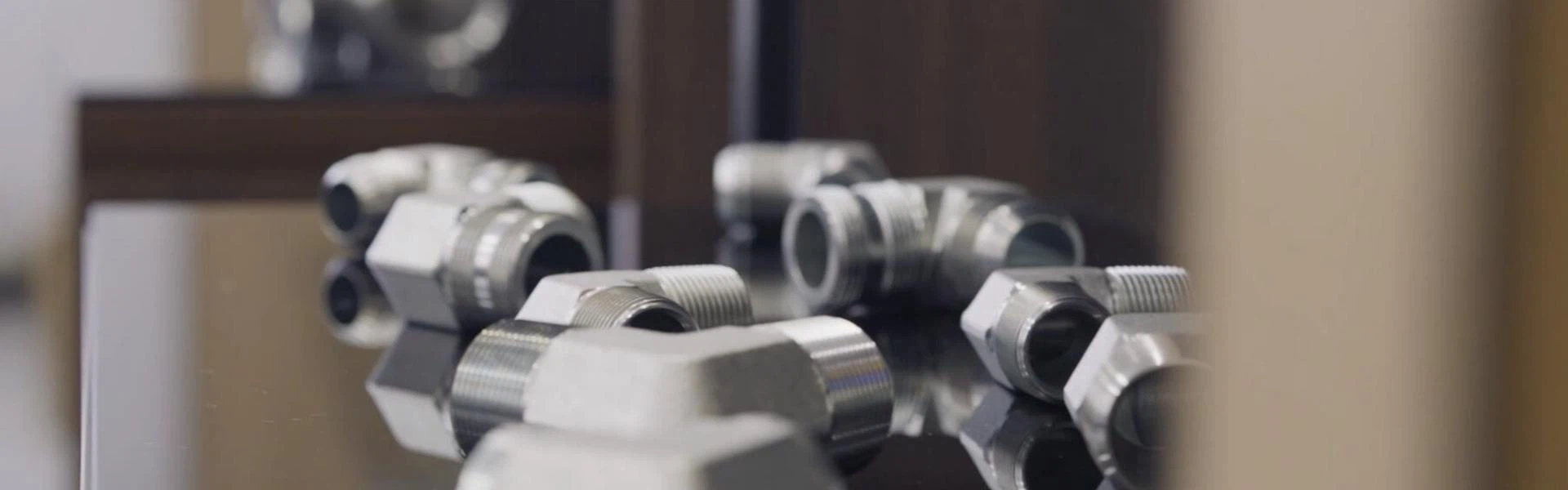
Q: Is it by design that Steel SAE Adapters are leak-free?
A: Ensuring a leak-free hydraulic system begins with the design, which involves selection of the correct hydraulic fittings, hoses and other components for the application. This could be a hose-end connection, hose or tube to port, a tube end or flange fitting. If it is a port connection, or 4-bolt flange, the correct O-ring material must be selected, which typically depends on the media the system is carrying, its temperature and pressure.
Q: What is a Steel SAE Adapter?
A: Steel SAE Adapters are designed to be versatile and cost-effective for mass production. They come in different materials but most are brass. SAE fittings have different seat angles. SAE J514, which is common in hydraulic applications, comes with a 37-degree flared male seat, the same as JIC flare fittings.
Q: How to determine Steel SAE Adapter size?
A: Measuring the Outer Diameter of the thread - place the ID/OD caliper around the threads so as to obtain a snug fit. Measuring the Inner Diameter of the thread - insert the caliper into the fitting so you can obtain the correct measurement, and match it to the data charts provided by the manufacturer.
Q: What is the function of adapter fitting?
A: Adapter is the fitting that are suitable to connect two pipes together. These fittings are available in sizes ranging from 1/8" to 2" in threaded connection of NPT and BSPP. The adapter type includes various thread of male by female adapter, hex nipple and plug.
Q: How tight should a Steel SAE Adapter be?
A: Once aligned, tighten the nut until it is "firm" against the washer and o-ring, with the nut becoming snug with a feel of metal-on-metal in less than one revolution. Over-tightening causes as many leaks as under-tightening.
Q: What is the purpose of Steel SAE Adapter?
A: A fitting or adapter is used in pipe systems to connect sections of pipe (designated by nominal size, with greater tolerances of variance) or tube (designated by actual size, with lower tolerance for variance), adapt to different sizes or shapes, and for other purposes such as regulating (or measuring) fluid flow.
Q: Can you use NPT for Steel SAE Adapters?
A: Hydraulic Systems: In heavy machinery such as tractors and excavators, NPT fittings are essential components in the hydraulic systems. They ensure secure connections between hydraulic lines, contributing to the efficient operation of the equipment.
Q: How to tighten a Steel SAE Adapter?
A: The process involves manually rotating the fitting until it makes a snug connection with the mating surface. This "hand-tight" approach is often sufficient for many low-pressure applications, making it a popular choice for quick repairs and installations.
Q: Steel SAE Adapter: What is the difference between fitting and adapter?
A: A fitting is needed for a hose to connect to a pump. An adapter is needed to connect the pump to more than one hose, where each hose may be of a different standard.
Q: What is the standard for Steel SAE Adapters?
A: BSP – also known as the British Thread Type, is standard fittings adopted internationally for making connections and sealing pipe ends. SAE Straight Thread – a thread type known for its reliability and reusability-has excellent sealing due to its 90-durometer O-rings.
Q: Can you over tighten Steel SAE Adapters?
A: Properly sealing a hydraulic fitting is crucial during assembly. Over-tightening can damage the seal, stripping threads or crushing an O-ring, causing the fitting to crack.
Q: How to torque a Steel SAE Adapter?
A: Tighten the nut lightly with a wrench (approximately 30 in.lb.), clamping the tube flare between the fitting nose and the sleeve. This is considered the Wrench Resistance (WR) position. Starting from this position, tighten the nut further by the number of flats from the Torque Chart.
Q: What are the basics of Steel SAE Adapters?
A: Steel SAE Adapters are specialized connectors used to connect fluid ports in hydraulic systems. These fittings ensure that the fluid transfer path is safe and leak-free and therefore play a vital role in the overall functioning of the system.
Q: Steel SAE adapter: What is the difference between L and S fittings?
A: S series fitting is able to work pressure between 315 to 630 bars. L series fitting is able to work at 160 bar or 315 bar pressure. It is subject to outer diameter size. The lowest pressure is 100 bars, which is available for LL series only.
Q: What is the angle of a Steel SAE adapter?
A: The two most popular mated angle (flare) hydraulic fittings are JIC 37-degree and SAE 45-degree. JIC 37-degree flare fittings are often used for high pressure applications in off-road and agricultural equipment, such as hydraulic loaders, excavators and tractors.
Q: How do you identify Steel SAE adapters?
A: Step 1: Determine if the thread is tapered or parallel.
Step 2: Determine the pitch.
Step 3: Determine the size.
Step 4: Designate the thread.
Q: How tight should a Steel SAE adapter be?
A: Once aligned, tighten the nut until it is "firm" against the washer and o-ring, with the nut becoming snug with a feel of metal-on-metal in less than one revolution. Over-tightening causes as many leaks as under-tightening.
Q: How do you loosen tight Steel SAE adapters?
A: Applying Penetrating Lubricants to Loosen the Hose. Spray the lubricant generously on the connection points and allow it to penetrate for a few minutes. The lubricant will work its way into the tight spaces, reducing friction and making it easier to remove the hose.
Q: What is the function of Steel SAE adapter?
A: Adapter is the fitting that are suitable to connect two pipes together. These fittings are available in sizes ranging from 1/8" to 2" in threaded connection of NPT and BSPP. The adapter type includes various thread of male by female adapter, hex nipple and plug.
Q: Is Steel SAE Adapter important for the use of equipment?
A: Hydraulic system maintenance is critical to the service life of equipment and the safety of personnel. It is imperative that maintenance technicians comply with necessary safety precautions. They must have the necessary training and continuing education on the specific equipment and know how to properly take samples, use the right test equipment and record data that can be used for ongoing preventative and corrective maintenance.