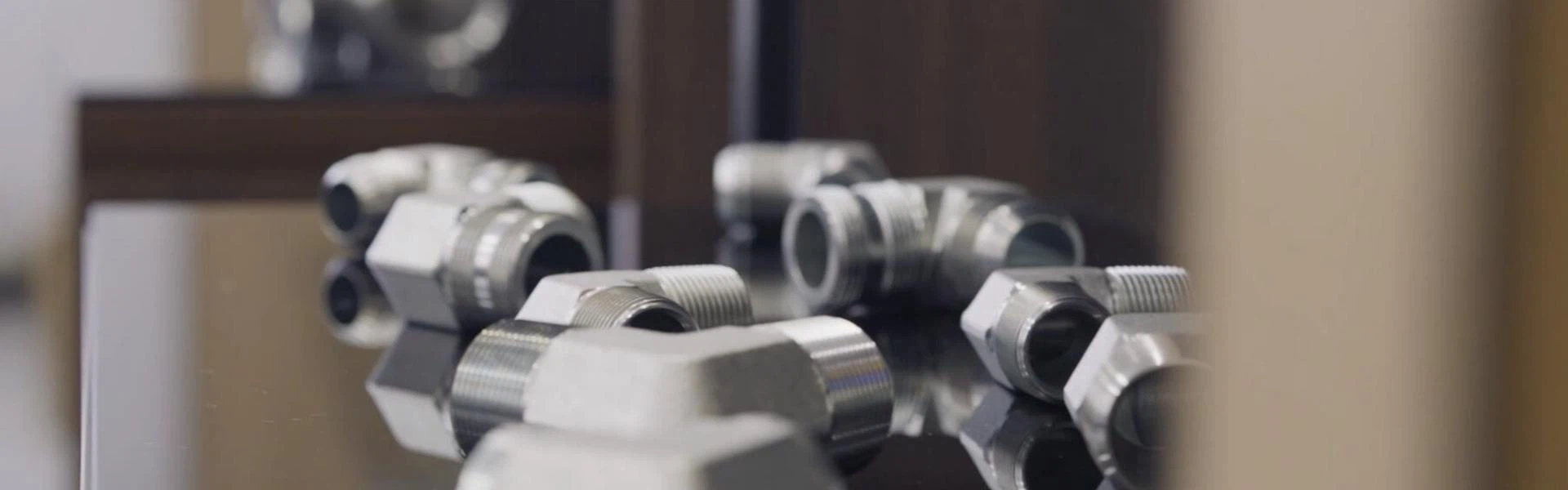
Hydraulic Fitting

Why Choose Us?

High Standard Products

Founded in 2004, NINGBO NJ HYDRAULIC ADAPTER CO.,LTD specializes in manufacturing hydraulic adapters, hydraulic fittings, hose fittings, flange adapters, split flange kits, reusable hose fittings, ferrules, caps & plugs, nuts and sell to worldwide.

Custom Service

Our history of collaboration with our customers for specially designed hydraulic applications, has established NJ hydraulic adapter as an industry-preferred source for customer-specific manufactured adapters.


Wide Range of Applications

We are proud to serve major markets including: Construction, agriculture, mining, industrial equipment and more.


Large Inventory

NJ have large inventory for storage adapters and fittings in 10000 SMQ. From the time we receive your order until it arrives at your facility, we're committed to meeting your deadlines and delivery requirements.


Definition of Hydraulic Fitting


Hydraulic fittings are components that act as connections. They connect the components of a hydraulic system to form a strong seal and ensure the proper functioning of the hydraulic system. Hydraulic fittings allow the hydraulic fluid to combine or diver. In some hydraulic systems, special hydraulic fittings can change the direction of the fluid. Hydraulic fittings like plugs can be used as the end of a hydraulic piping system to stop fluid leaks. Hydraulic fittings are metal products that can withstand different pressure specifications. Common fittings vary in corrosion resistance, wear resistance, and sealing properties depending on the materials. Most fittings are made according to international standards, so they can be adapted to fit the needs of all applications.


First 123 Last 1/3

 
Benefits of Hydraulic Fitting
 

Choosing the best hydraulic fittings goes beyond mere functionality. Here are some advantages that are worth considering about the hydraulics fitting:

01/

Enhanced Durability:
High-quality hydraulic fittings are crafted from durable materials, ensuring longevity and robust performance even in demanding conditions.

02/

Optimal Performance:
Precision engineering of top-tier hydraulic fittings ensures seamless connections, minimizing fluid leakage and maintaining optimal system performance.

03/

Reliable Sealing:
The best fittings come with advanced sealing mechanisms, reducing the risk of leaks and enhancing the overall reliability of hydraulic systems.

04/

Resistance to Wear and Tear:
Quality fittings are designed to resist wear and tear, making them ideal for heavy-duty applications where components are subjected to constant pressure and movement.

05/

Compatibility Assurance:
Investing in reputable hydraulic fittings ensures compatibility with various hydraulic systems, providing versatility and ease of integration.

06/

Safety First:
High-quality fittings undergo rigorous testing to meet safety standards, reducing the risk of accidents and ensuring the well-being of both equipment and operators.


What Are Hydraulic Fittings Made Of?

Hydraulic fittings can be made from many materials, the most common ones being plastic, stainless steel, or brass. The type of assembly or industry application usually determines what material is suitable.

Plastic Hydraulic Fittings – These types are much more resistant to corrosion compared to their metal counterparts. However, they are physically weaker and less durable. This is why they are not preferred for hydraulic applications despite the low cost. Metal fittings are better suited for high-pressure ratings found in industrial applications.


Steel Hydraulic Fittings – These types of fittings are made of steel alloys which means they are far more durable than their plastic counterparts. For instance, carbon steel fittings can withstand temperatures from -53°C up to 260°C.


Stainless Steel Fittings – As the name suggests, these are the stainless steel variant of steel hydraulic fittings. Stainless steel fittings are utilised in situations where they would need to withstand temperatures ranging from -253°C up to 648°C. Their tough nature makes them the choice of fitting for highly corrosive environments. Fittings made from this material are generally rated up to 10,000 psi, with some special designs capable of withstanding up to 20,000 psi. The primary drawback for these is their high price, which usually prompts industries to consider alternatives for less hard-wearing applications.


Brass Fittings – These are not as strong or durable as their stainless steel counterparts. However, they can provide a tight seal that prevents leaks and meet SAE (Society of Automotive Engineers), ISO (International Organization for Standardization), DIN (Deutsches Institute für Normung), and JIS (Japanese Industrial Standards) standards, among others. Brass fittings are rated for temperatures from -53°C up to 204°C, and pressures up to 3,000 psi.


Aluminium Fittings – Hydraulic fittings made from aluminium are less common, but do exist and are used in certain applications. They are lighter than steel but are resistant to corrosion. These qualities make them preferable in transportation hydraulics such as the automotive industry.


How To Install Hydraulic Fittings?

Installing hydraulic fittings needs careful attention to detail. It ensures a secure and leak-free connection. Here are five primary steps that you can follow:

可重复使用的 JIC 液压配件
可重复使用的 JIC 配件
可重复使用的 JIC 软管接头
派克可重复使用软管接头

Step 1: Cut The Hose And Prepare The End
First, measure and cut the hydraulic hose based on your specific requirements. In this case, use a suitable cutting tool. While cutting the hose, ensure a clean and straight cut. After cutting the hose, remove debris or dirt from the hose end using compressed air or a cleaning tool. In this case, ensure that the inner tube and outer cover are contaminants-free.


Step 2: Select The Appropriate Fittings And Insert The Hose Into It
This step is tricky because it involves choosing the most suitable product for your project. The appropriate hydraulic fittings ensure the efficiency of your hydraulic system. Choose the hydraulic fitting that matches the hose size, type, and required connection method. After that, slide the fitting onto the hose end. They are ensuring that the two components are correctly aligned and fully inserted. At last, make sure any O-rings or seals are in place.


Step 3: Crimp Or Assemble The Fitting
In this step, you can follow the manufacturer's instructions to crimp. In this case, use suitable crimping to install the hose into the fitting. Some crimping machines may not provide perfect gripping. Therefore, it is essential to check your device before crimping. Apply the appropriate amount of force for a secure connection.


Step 4: Conduct Visual Inspection
After crimping the fittings, inspect the assembled fitting to ensure proper alignment. You should also ensure no visible defects or irregularities. Also, check for any signs of leakage or improper installation.


Step 5: Install Protective Caps And Test The Connection
Protect it with a protective cap after successfully crimping and conducting the inspection. In this case, you can also use protective plugs to prevent dirt or contaminants from entering the hose or fittings.
Once the protective cap is installed, perform a pressure test to check for leaks or other issues. In this case, follow safety protocols during the testing process.


How to Measure Hydraulic Fittings?
 

Measure the length of hydraulic hose fittings

The easiest part of measuring a hydraulic hose joints is to find the length. There is nothing tricky. All you need to determine the length of the hydraulic joint is the measure tape and sharp eyes. Put the connector on the desktop, stretch the tape measure from one end to the other, read the data with your eyes, you can know the length of the accessory. (If it is a small size hose accessory, you can directly use a caliper for more accurate measurement. If the length exceeds the caliper measurement range, please use a tape measure)

Measure the outer diameter

Determining the outer diameter of hydraulic fittings is a complicated process involving the use of calipers:
First, you should slide the top screw of the caliper all the way to the front end of the tool to reset it to zero.
Then, put the caliper on the outside of the accessory, and the jaws should be slowly opened so that the accessory is stuck between the jaws.
After placing the accessory between the jaws, slowly close the caliper so that the jaws touch the outside of the accessory.
Accurately mark the number with the first mark located on the highest scale between the two marks.
Finally, the numbers on the bottom scale should be perfectly aligned with the marks on the sliding scale, and then added to the end of the top scale numbers (for example, if the first mark is between 1.3 and 1.4, and the bottom mark is located The bottom is 4 and the outer diameter is 1.34).
Accurate reading of the caliper requires a certain level of experience and accuracy.
Vernier calipers can provide the correct height reading. You may need to measure the diameter multiple times to ensure the correct result.

Measuring the inner diameter

The inner diameter (or internal thread) is also measured with a caliper. The process is similar. However, this time, you must place the jaws of the caliper inside the accessory to get an accurate reading.

Determine the thread gauge

To use a pitch gauge, simply place the gauge teeth on the thread until a tight fit is found. Make sure that there is no gap between the teeth of the gauge and the accessories. If the accessory is not a new accessory, it may be difficult to find a matching product, so it is best to always use a new accessory.


How to Connect Hydraulic Fittings to Tubes?


Assembly process is important to ensure high performance hydraulic fittings. Assembly and disassembly of the fittings are equally easy. Due to the robust tube grip, it is very resistant to vibration fatigue and is able to withstand high pressures as well as extreme temperatures.


By using correct assembly tool, there are 5 steps to be followed:


Step 1: Cutting ring and nut to be placed over the tube in the correct direction.


Step 2: Before hand-tighten with the nut, the tube will need to insert into the pre-assembly tool up to tube abutment.


Step 3: Tighten 1 1/4 turns beyond the hand tighten position by using a wrench.


Step 4: Take out the pre-assembly and untighten and remove the nut to check the ring formed up over the tube. The visible ring is formed up with the penetration of the cutting ring into the tube surface.


Step 5: With fitting body holding up, use a wrench to tighten the nut until a noticeable increase in torque is felt. Beyond this point tighten the nut 1/4 turn for last round of assembly.


Maintenance of Hydraulic Fitting

Just like any component, hydraulic fittings require regular maintenance. Here are some key hydraulic fitting maintenance practices to keep your fittings in top shape: 


Regular Inspections: Conduct visual inspections of your fittings at regular intervals, looking for signs of wear, corrosion, cracks, or loose connections. Pay close attention to areas around the threads and where the fitting connects to the hose or tubing.


Cleaning: Dirt, debris, and contaminants can compromise the integrity of the seal and accelerate wear. Regularly clean your fittings using a mild soap solution and warm water. Avoid harsh chemicals or abrasive tools that might damage the fitting's finish.


Tightening: Over time, vibrations and pressure fluctuations can cause fittings to loosen slightly. Use a torque wrench to periodically check and tighten fittings to the manufacturer's recommended specifications. Be careful–over-tightening can damage the threads or fitting body.


Hose Condition: The health of the hose directly impacts the fittings. Regularly inspect hoses for signs of wear, damage, or bulging. Replace any compromised hoses and prevent them from putting undue stress on the fittings.


Fluid Monitoring: Hydraulic fluid can degrade over time or even become contaminated. Maintain a regular fluid change schedule as recommended by your system's manual. The fluid's cleanliness plays a vital role in preventing corrosion and wear on fittings.


Storage: When storing spare fittings, keep them in a clean, dry environment away from direct sunlight and extreme temperatures. This will help prevent corrosion and ensure they are ready for use when needed.


Visually inspect the fitting for damage, deformations, cracks, or corrosion. Replace the fitting if there are any signs of decay. Remove the O-ring and thoroughly clean the fitting, then replace the O-ring with a new one, regardless of how the old O-ring looks. Check that the threads run true and the fitting is ready to be reused!


Our Factory


Founded in 2004, NINGBO NJ HYDRAULIC ADAPTER CO.,LTD specializes in manufacturing hydraulic adapters, hydraulic fittings, hose fittings, flange adapters, split flange kits, reusable hose fittings, ferrules, caps & plugs, nuts and sell to worldwide. We are proud to serve major markets including: construction, agriculture, mining, industrial equipment and more.

产品类别-1-1


NJ have large inventory for storage adapters and fittings in 10000 SMQ. From the time we receive your order until it arrives at your facility, we're committed to meeting your deadlines and delivery requirements. Our goal is to provide your fittings as fast as possible - when and where you need them - which also helps you keep your Whether you have an emergency or an ongoing need, send us an email. We deliver the fittings you want, along with the quality, service and competitive price you deserve.

productcate-1-1

productcate-1-1

productcate-1-1

productcate-1-1


Our Certificate


productcate-1-1

productcate-1-1


Ultimate FAQ Guide to Hydraulic Fitting
 

Q: How to choose hydraulic fittings?

A: Know the diameter: The first thing you need to know is the diameter of the hose or pipe.
Understanding pressure ratings: Every fitting has a certain pressure rating range.
Thread compatibility: Mismatched threads can lead to leaks or even catastrophic failure.

Q: Are hydraulic fittings metric or standard?

A: Hydraulic fittings with metric threads are the most common connectors worldwide. The three primary styles used in different regions and by specific OEMs are: DIN Metric fitting standards cover hydraulic hose fittings and compression fittings.

Q: What is the difference between L and S hydraulic fittings?

A: There are 3 series available, which is S, L and LL series. S series fitting is able to work pressure between 315 to 630 bars. L series fitting is able to work at 160 bar or 315 bar pressure. It is subject to outer diameter size. The lowest pressure is 100 bars, which is available for LL series only.

Q: What are the three types of hydraulic fittings?

A: Fitting Ends And Connector Types. The three most common fitting ends and connector types for hydraulic fittings are the O-ring, the mated angle, and the tapered thread connectors. Although these are the most popular choices, several other types are used in different and specialised applications.

Q: What do the numbers on hydraulic fittings mean?

A: Some fittings will be stamped with a number. We refer to these as a dash size, which indicates the connection size. Keep in mind these numbers are all relative to 1/16". For example, a -8 fitting is 8/16, or 1/2".

Q: How to figure out hydraulic fittings size?

A: The measurement steps are as follows:
Measure the length of hydraulic hose fittings. The easiest part of measuring a hydraulic hose joints is to find the length.
Measure the outer diameter. Determining the outer diameter of hydraulic fittings is a complicated process involving.
Measuring the inner diameter. The inner diameter is also measured with a caliper. The process is similar..
Determine the thread gauge. To use a pitch gauge, simply place the gauge teeth on the thread until a tight fit is found.
Measuring angle. Use a protractor to determine the angle of the accessory.

Q: Are hydraulic fittings metric or imperial?

A: As with many things, including hydraulics, the only real difference is where they're used. Much of Europe and all of Asia uses metric for sizing tube, fittings, cylinders, pumps and more. In the U.S., the Imperial standard is used to size the same components. Unfortunately, they are not compatible.

Q: How do I choose the suitable hydraulic fittings standard?

A: The choice of hydraulic fitting standard depends on the specific application and components in your system and may also come down to your geography since where you live and work plays a part in which fittings your local industry is comfortable with. Factors such as pressure rating, fluid compatibility, and temperature range must be considered when selecting the fitting standard for your application.

Q: What are the uses of hydraulic fittings?

A: Hydraulic fittings are used in hydraulic systems to connect hoses, pipes, and tubes to various components such as pumps, valves, and cylinders. These fittings are designed according to metric dimensions and standards, which are widely used in Europe and other parts of the world.

Q: What materials are hydraulic fittings made from?

A: Hydraulic fittings are manufactured from various materials, each chosen based on the specific requirements of the hydraulic system, including pressure, temperature, fluid compatibility, and environmental conditions.

Q: How do I choose hydraulic fittings?

A: Choosing the appropriate fitting for the job requires considering the hose size, fitting type, connection type, and hydraulic system's psi and temperature ratings. The fitting should be rated for more pressure and temperature than the hydraulic system's rating to create room for a safety margin.

Q: Do I need to use teflon tape on hydraulic fittings?

A: There are basic principles in how to seal hydraulic fittings. It's okay to use Teflon tape on NPT threads and Loctite 5452 thread sealant on NPT or JIC fittings. However, there is no need to use any type of sealant on JIC 37-degree flare fittings and most O-ring connections.

Q: How tight should hydraulic fittings be?

A: Once aligned, tighten the nut until it is "firm" against the washer and o-ring, with the nut becoming snug with a feel of metal-on-metal in less than one revolution. Over-tightening causes as many leaks as under-tightening.

Q: What does BSP stand for in hydraulic fittings?

A: British Standard Pipe (BSP). Also referred to as Whitworth threads, the BSP thread type fittings seal using metal to metal angled surfaces or a combination of metal to metal and an O-ring. The angle of the sealing surfaces is 60° for both forms. There are two popular thread forms, British Standard Pipe Parallel (BSPP) and British Standard Pipe Tapered (BSPT).

Q: How do you measure hydraulic fittings?

A: For Metric parallel threads, taking a caliper reading of the threads outer diameter in millimetres (mm) will give a reading of the exact thread size but not the thread pitch. For example, a caliper reading of 12.03mm indicates it is very likely a 12mm thread.

Q: How can you tell the difference between hydraulic fittings?

A: It's a lot easier than it looks by following the steps below.
· Step 1: Reusable or permanent? Is the fitting reusable or permanent?
· Step 2: Identify fitting ends and port connections.
· Step 3: Identify the sealing method.
· Step 4: Look at the fitting design.

Q: How to torque a hydraulic fittings?

A: Tighten the nut lightly with a wrench (approximately 30 in.lb.), clamping the tube flare between the fitting nose and the sleeve. This is considered the Wrench Resistance (WR) position. Starting from this position, tighten the nut further by the number of flats from the Torque Chart.

Q: Hydraulic fittings: Are metric threads different than standard?

A: The metric system for measuring screw threads uses metric units, pitch in millimeters (mm). This is the distance measured between the peaks of two adjacent threads. Whereas, the standard system - the imperial system - measures threads in imperial units by TPI: threads per inch.

Q: Hydraulic fittings: Which is better, metric or standard?

A: Which one is better? Just looking at the facts, it's easy for someone to argue that the metric system is vastly superior to the imperial system. Nearly every country uses it. This almost universal standard allows you to understand measurements — and be understood — no matter where you are.

Q: What are the three types of hydraulic fittings?

A: Fitting Ends And Connector Types. The three most common fitting ends and connector types for hydraulic fittings are the O-ring, the mated angle, and the tapered thread connectors.

Ningbo Nj Hydraulic Adapter Co., Ltd is known as one of the most professional hydraulic fitting manufacturers and suppliers in China. Please rest assured to wholesale high quality hydraulic fitting made in China here from our factory.

jic female, hydraulic hose fittings, hose crimp fittings

(0/10)

clearall