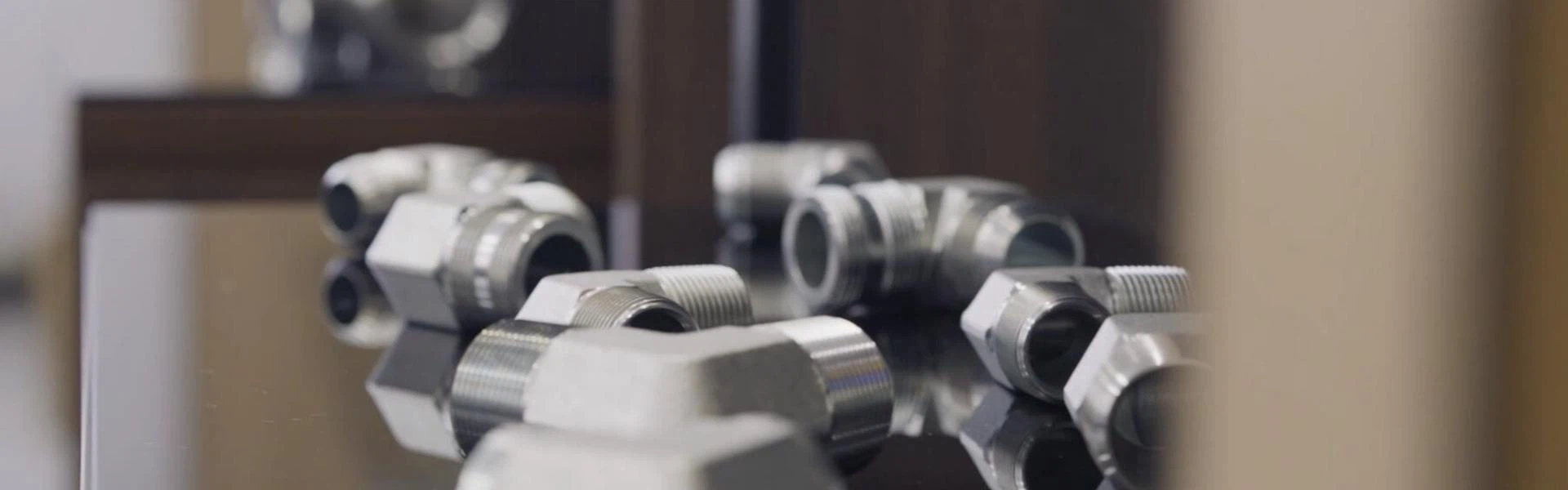
Metric Hydraulic Fittings

Why Choose Us?

High Standard Products

Founded in 2004, NINGBO NJ HYDRAULIC ADAPTER CO.,LTD specializes in manufacturing hydraulic adapters, hydraulic fittings, hose fittings, flange adapters, split flange kits, reusable hose fittings, ferrules, caps & plugs, nuts and sell to worldwide.

Custom Service

Our history of collaboration with our customers for specially designed hydraulic applications, has established NJ hydraulic adapter as an industry-preferred source for customer-specific manufactured adapters.


Wide Range of Applications

We are proud to serve major markets including: Construction, agriculture, mining, industrial equipment and more.


Large Inventory

NJ have large inventory for storage adapters and fittings in 10000 SMQ. From the time we receive your order until it arrives at your facility, we're committed to meeting your deadlines and delivery requirements.


Definition of Metric Hydraulic Fittings


Metric hydraulic fittings are those used in hydraulic systems conforming to the metric measurement system. These fittings connect hydraulic hoses, tubes, and pipes to pumps, valves, and other hydraulic components. They typically feature a threaded connection providing easy attachment to bungs, ports or adapters, coming in various shapes and sizes to accommodate different components in a hydraulic system.


First 12 Last 1/2

Benefits of Metric Hydraulic Fittings
 
Ease of Use

Simplicity: The metric system is based on the decimal system, which simplifies calculations, measurements, and conversions.
Fewer Sizes: Standardized sizing in metric fittings often means fewer variations and sizes to manage, streamlining inventory and reducing complexity.

Versatility

Wide Range of Applications: Suitable for various industries, including automotive, aerospace, manufacturing, and agriculture.
Material Options: Available in a variety of materials (steel, stainless steel, brass, aluminum), making them adaptable to different environments and applications.

High Pressure and Temperature Ratings

Performance: Metric fittings are designed to handle high pressure and temperature ranges, making them suitable for demanding hydraulic applications.
Durability: High-quality materials and precise manufacturing processes ensure long-lasting performance even in harsh conditions.

Improved Sealing Mechanisms

Advanced Designs: Metric fittings often incorporate advanced sealing mechanisms such as O-ring face seals (ORFS) and 24° cone fittings, providing superior leak prevention and reliability.
Reduced Maintenance: Better sealing reduces the need for frequent maintenance and downtime, improving overall system efficiency.

Environmental Compatibility

Corrosion Resistance: Available in materials and coatings that provide excellent corrosion resistance, suitable for harsh and corrosive environments.
Chemical Compatibility: Metric fittings are often compatible with a wide range of hydraulic fluids and chemicals, enhancing their versatility.

Cost-Effectiveness

Standardization: Standardized sizes and global availability can lead to lower costs in production and procurement.
Long-Term Savings: Reduced leakage, lower maintenance needs, and improved reliability contribute to long-term cost savings.


What Materials Are Metric Hydraulic Fittings Made From?
 

Metric hydraulic fittings, just like their imperial counterparts, come from a variety of different materials, the likes of which depend on the specific application and use case. Some of the most common materials include:

Stainless steel

This is a common material for metric hydraulic fittings, as it offers excellent corrosion resistance and high strength. 304SS offers great overall protection from ambient water and salt, but for corrosive chemicals, look for fittings in 316SS.

Brass

This is a softer material often used in low-pressure hydraulic systems, as it is less expensive than stainless steel. Rarely used in hydraulics, you tend to see brass more commonly in pneumatic systems.

Carbon stee

This is a strong and durable material that is commonly used in high-pressure hydraulic systems. More often than not, you see carbon steel plated in zinc or nickel to increase corrosion resistance.

Aluminum

This lightweight material is often used in mobile hydraulic systems, where weight is a concern. They're also used in specialty applications, such as fuel lines, for example.


高品质 45° 公制公头至旋转母头液压适配器


The Practicality of Metric Hydraulic Fittings

You rarely have a choice between using Imperial or metric threads in maintenance. You often must use what the OEM specified. However, though there are different styles of metric threads, they are more advantageous than Imperial for many practical reasons.


Metric is a simple form of measurement, with everything in 1/10 increments as a base of whole numbers. Beyond ease of extrapolating data, their common sizes can help reduce the number of fittings on a bill of materials.


They are far more interchangeable in the global market than Imperial fittings. In fact, interchangeability was the key reason the automotive industry moved to metric threads for many connections, from fasteners to fittings.


As the most precise form of measurement, like automotive, the metric system has been either partially or fully embraced by major segments of the aerospace, medical and electronics industries.


Metric threads are often a better choice for vibration resistance and in providing a larger stress area in the cross section of the threads.


These are just a few benefits of metrics that can add to long term cost savings in design, manufacturing and assembly, as well as the service life of many components.


Metric Hydraulic Fittings vs. British vs. American Threads
 

Choosing the correct thread type for a hydraulic system can sometimes be like navigating a maze. Let's clear up the maze by analyzing the differences and applications of metric, fractional and American threads.

Metric vs. American Threads

Size: Metric threads have thread pitches measured in millimeters, while American threads are measured in inches. This means that metric threads offer finer adjustments, especially for high-precision applications.
Compatibility: Metric threads are recognized worldwide, making them a more versatile choice. American threads, while popular in the United States, may require an adapter for use in international environments.
Applications: Generally, US threads can be found in older equipment and in US infrastructure. However, metric threads dominate automotive and industrial applications worldwide.

Metric vs. Imperial Threads

Difference: Inch threads typically use the Whitworth thread form, which is characterized by a 55-degree thread angle. Metric threads typically have a thread angle of 60 degrees. This affects sealing and strength, so they are not interchangeable.
Advantages and disadvantages: Inch threads are strong but uncommon and therefore difficult to source. Metric threads are universally recognized, easier to find, and have advantages in terms of availability and cost.
Usage: Imperial threads are common in the UK and Commonwealth countries. Metric threads are more commonly used, especially in Europe and Asia.


Metric Hydraulic Fittings Identification Chart

Metric thread type is most common in Europe. It has a cylindrical inner and outer diameter precise in millimeters. The fine taper of metric tapered thread allows for the best possible force transmission. In writing, you can identify metric threads by a capital "M" plus an indication of their nominal outside diameter (ex. M22 x 1.5). Lastly, when measuring pitch size make sure you're using a metric pitch gauge.

productcate-431-280

p = Pitch of the thread
d = Depth of the thread
r = Radius at the top and bottom of the threads
Then:
d = 0.61344 p
r = 0.14434 p 


Are Metric Hydraulic Fittingss Interchangeable with Other Standards?


Metric hydraulic fittings are generally not interchangeable with other standards, especially the imperial JIC or SAE fittings, due to the differences in thread diameter, pitch, and shape. However, some manufacturers produce fittings that interchange between different standards. That said, care must be taken to ensure compatibility with the specific plumbing, valves, pumps, and actuators selected.


This then begs the question — can I use different standards of hydraulic fittings in the same system? If the fittings fit (correctly), you can get away with different standards. However, using different standards of hydraulic fittings in the same system is generally not recommended, as this can lead to leaks, poor connection strength, and confusing maintenance. It is essential to use fittings that meet the same standard and are designed to work together to ensure optimal machine performance and the safety of the surrounding workers.


International Standards: Metric Hydraulic Fittings


Metric hydraulic fittings are designed and manufactured according to various standards to ensure compatibility and performance. Some of the common standards include:


DIN (Deutsches Institut für Normung): A German standard that specifies dimensions, tolerances, and testing requirements for hydraulic fittings. For example, the DIN 2353 standard focuses on flareless bite fittings, which are critical for high-pressure systems. In short, if a product is DIN certified, it is a sign of quality and international recognition.


ISO (International Organization for Standardization): Provides international standards for hydraulic fittings to ensure global compatibility. For example, ISO 8434: This is another standard for metric fittings related to 24-degree taper fittings; ISO 6149: This standard specializes in metric O-ring face seals; ISO 9974: This standard covers metric ports and stud ends.


Our Factory


Founded in 2004, NINGBO NJ HYDRAULIC ADAPTER CO.,LTD specializes in manufacturing hydraulic adapters, hydraulic fittings, hose fittings, flange adapters, split flange kits, reusable hose fittings, ferrules, caps & plugs, nuts and sell to worldwide. We are proud to serve major markets including: construction, agriculture, mining, industrial equipment and more.

产品类别-1-1


NJ have large inventory for storage adapters and fittings in 10000 SMQ. From the time we receive your order until it arrives at your facility, we're committed to meeting your deadlines and delivery requirements. Our goal is to provide your fittings as fast as possible - when and where you need them - which also helps you keep your Whether you have an emergency or an ongoing need, send us an email. We deliver the fittings you want, along with the quality, service and competitive price you deserve.

productcate-1-1

productcate-1-1

productcate-1-1

productcate-1-1


Our Certificate


productcate-1-1

productcate-1-1


Ultimate FAQ Guide to Metric Hydraulic Fittings
 

Q: How do I choose the suitable metric hydraulic fittings standard?

A: The choice of metric hydraulic fitting standard depends on the specific application and components in your system and may also come down to your geography since where you live and work plays a part in which fittings your local industry is comfortable with. Factors such as pressure rating, fluid compatibility, and temperature range must be considered when selecting the fitting standard for your application.

Q: What are the different standards for metric hydraulic fittings?

A: Several standards for metric hydraulic fittings exist, including DIN 2353, ISO 8434-1, ISO 6149-1, and BS EN ISO 12151-2. Each of these standards has its unique features and specifications, which are essential to know. They ensure that the fittings used in hydraulic systems meet the required standards and are compatible with the plumbing and components of your system.

Q: What are the uses of metric hydraulic fittings?

A: Metric hydraulic fittings are used in hydraulic systems to connect hoses, pipes, and tubes to various components such as pumps, valves, and cylinders. These fittings are designed according to metric dimensions and standards, which are widely used in Europe and other parts of the world.

Q: What materials are metric hydraulic fittings made from?

A: Metric hydraulic fittings are manufactured from various materials, each chosen based on the specific requirements of the hydraulic system, including pressure, temperature, fluid compatibility, and environmental conditions.

Q: What is the difference between L and S metric hydraulic fittings?

A: There are 3 series available, which is S, L and LL series. S series fitting is able to work pressure between 315 to 630 bars. L series fitting is able to work at 160 bar or 315 bar pressure. It is subject to outer diameter size. The lowest pressure is 100 bars, which is available for LL series only.

Q: What are the three types of metric hydraulic fittings?

A: Fitting Ends And Connector Types. The three most common fitting ends and connector types for metric hydraulic fittings are the O-ring, the mated angle, and the tapered thread connectors. Although these are the most popular choices, several other types are used in different and specialised applications.

Q: What do the numbers on metric hydraulic fittings mean?

A: Some fittings will be stamped with a number. We refer to these as a dash size, which indicates the connection size. Keep in mind these numbers are all relative to 1/16". For example, a -8 fitting is 8/16, or 1/2".

Q: How to figure out metric hydraulic fittings size?

A: The measurement steps are as follows:
Measure the length of hydraulic hose fittings. The easiest part of measuring a hydraulic hose joints is to find the length.
Measure the outer diameter. Determining the outer diameter of metric hydraulic fittings is a complicated process involving.
Measuring the inner diameter. The inner diameter is also measured with a caliper. The process is similar..
Determine the thread gauge. To use a pitch gauge, simply place the gauge teeth on the thread until a tight fit is found.
Measuring angle. Use a protractor to determine the angle of the accessory.

Q: Are hydraulic fittings important for proper installation?

A: Hydraulic fittings are crucial in ensuring secure and leak-free connections within hydraulic systems. They come in various types, each suitable for specific applications. Proper installation techniques are essential for achieving reliable and efficient hydraulic systems. Moreover, regular maintenance and inspections are also necessary for long-lasting hydraulic systems.

Q: Is it important to choose the right metric hydraulic fittings?

A: The different types of metric hydraulic fittings is crucial for selecting the right components for a hydraulic system. Each type has its unique characteristics and applications, ensuring that the system operates efficiently and reliably. When choosing metric hydraulic fittings, it is essential to consider factors such as pressure rating, sealing method, and compatibility with other system components to ensure optimal performance.

Q: How do you measure metric hydraulic fittings?

A: For Metric parallel threads, taking a caliper reading of the threads outer diameter in millimetres (mm) will give a reading of the exact thread size but not the thread pitch. For example, a caliper reading of 12.03mm indicates it is very likely a 12mm thread.

Q: How tight should metric hydraulic fittings be?

A: Once aligned, tighten the nut until it is "firm" against the washer and o-ring, with the nut becoming snug with a feel of metal-on-metal in less than one revolution. Over-tightening causes as many leaks as under-tightening.

Q: How do you measure metric hydraulic fittings?

A: For Metric parallel threads, taking a caliper reading of the threads outer diameter in millimetres (mm) will give a reading of the exact thread size but not the thread pitch. For example, a caliper reading of 12.03mm indicates it is very likely a 12mm thread.

Q: How to torque a metric hydraulic fittings?

A: Tighten the nut lightly with a wrench (approximately 30 in.lb.), clamping the tube flare between the fitting nose and the sleeve. This is considered the Wrench Resistance (WR) position. Starting from this position, tighten the nut further by the number of flats from the Torque Chart.

Q: What is the knowledge of metric hydraulic fittings?

A: Metric hydraulic fittings must attach securely to the equipment and hose and must withstand high pressure and temperatures. Fittings are made in different sizes, materials, types of seals, and temperature and pressure tolerances. Some fittings enable fluid flow, others prevent it, and some are designed to do both.

Q: What is the difference between DIN and metric metric hydraulic fittings?

A: They are similar to German DIN fittings. Though the French G GAZ have fine threads in all sizes, German DIN fittings use standard threads in the larger sizes. Metric fittings have either parallel or tapered threads. Metric parallel threads utilize a variety of methods for sealing connections.

Q: Metric hydraulic fittings: Are metric threads different than standard?

A: The metric system for measuring screw threads uses metric units, pitch in millimeters (mm). This is the distance measured between the peaks of two adjacent threads. Whereas, the standard system - the imperial system - measures threads in imperial units by TPI: threads per inch.

Q: What does BSP stand for in metric hydraulic fittings?

A: British Standard Pipe (BSP). Also referred to as Whitworth threads, the BSP thread type fittings seal using metal to metal angled surfaces or a combination of metal to metal and an O-ring. The angle of the sealing surfaces is 60° for both forms. There are two popular thread forms, British Standard Pipe Parallel (BSPP) and British Standard Pipe Tapered (BSPT).

Q: How do you measure the size of metric hydraulic fittings?

A: · Measure The Length. Using the thread pitch gauge, simply place the gauge teeth on the threads until a tight fit is found.
Determine The Outside Diameter. The outside diameter of a fitting is determined with the assistance of callipers.
Calculate The Inside Diameter. The inner diameter is also measured with callipers.
Evaluate The Thread Gauge. The thread pitch gauge determines the distance between threads.
Estimate The Angle. Use a protractor to determine the angle of the fitting.

Q: How can you tell the difference between metric hydraulic fittings?

A: It's a lot easier than it looks by following the steps below.
Step 1: Reusable or permanent? Is the fitting reusable or permanent?
Step 2: Identify fitting ends and port connections.
Step 3: Identify the sealing method.
Step 4: Look at the fitting design.

Ningbo Nj Hydraulic Adapter Co., Ltd is known as one of the most professional metric hydraulic fittings manufacturers and suppliers in China. Please rest assured to wholesale high quality metric hydraulic fittings made in China here from our factory.

metric hydraulic plugs, flareless compression hydraulic tube fittings, metric hydraulic adapters

(0/10)

clearall