

Are there any limitations when using a 90° male elbow?
Aug 05, 2025
Hey there! As a supplier of 90° male elbows, I've been getting a lot of questions lately about the limitations of using these handy little fittings. So, I thought I'd sit down and write a blog post to clear up some of the confusion.
Let's start by talking about what a 90° male elbow is. It's a type of fitting that's used to connect two pipes or tubes at a 90-degree angle. They're commonly used in plumbing, HVAC, and hydraulic systems, among other things. They come in a variety of materials, including brass, stainless steel, and plastic, and they can be threaded or welded.
Now, let's get into the limitations. One of the biggest limitations of using a 90° male elbow is the pressure drop. When fluid flows through a 90° elbow, it has to change direction suddenly, which causes turbulence and increases the resistance to flow. This results in a pressure drop, which can reduce the efficiency of the system. The pressure drop is proportional to the flow rate and the size of the elbow, so the larger the elbow and the higher the flow rate, the greater the pressure drop.
Another limitation is the potential for erosion. When fluid flows through a 90° elbow, it can cause erosion on the inside of the elbow, especially if the fluid contains abrasive particles. Over time, this erosion can weaken the elbow and cause it to fail. The risk of erosion is higher in systems that handle high-velocity fluids or fluids with a high concentration of abrasive particles.
In addition to pressure drop and erosion, 90° male elbows can also cause noise and vibration. The turbulence created by the sudden change in direction can cause the fluid to vibrate, which can lead to noise and damage to the system. This is especially true in systems that operate at high speeds or with high pressures.
Now, don't get me wrong. 90° male elbows are still a very useful and widely used fitting. They're often the best choice for connecting pipes or tubes at a 90-degree angle, especially in tight spaces. But it's important to be aware of their limitations and to take them into account when designing a system.
So, what can you do to minimize the limitations of using a 90° male elbow? One option is to use a larger elbow. A larger elbow will have a lower pressure drop and a lower risk of erosion than a smaller elbow. Another option is to use a smooth-bore elbow. A smooth-bore elbow has a smoother interior surface, which reduces the turbulence and the pressure drop.
You can also use a 45° elbow instead of a 90° elbow. A 45° elbow will cause less turbulence and a lower pressure drop than a 90° elbow, which can improve the efficiency of the system. If you need to make a 90-degree turn, you can use two 45° elbows instead of one 90° elbow.
In some cases, you may be able to use a different type of fitting altogether. For example, if you're working in a hydraulic system, you might consider using an ORFS to O-Ring Hydraulic Adapter. These adapters are designed to provide a leak-free connection between two hydraulic components, and they can be used to make a 90-degree turn without the need for a 90° male elbow.
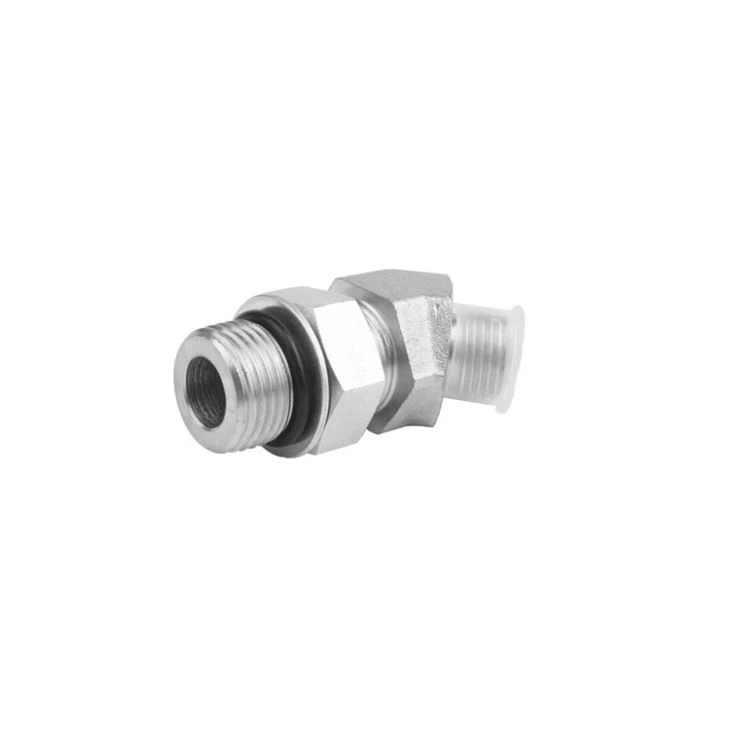
Another option is to use an ORFS to O-Ring Elbow 45° Tube Fitting. These fittings are similar to 90° male elbows, but they have a 45-degree angle instead of a 90-degree angle. They can be used to make a 90-degree turn in two steps, which can reduce the pressure drop and the risk of erosion.
Finally, if you need to make a 90-degree turn in a long tube, you might consider using an Adjustable Stud Elbow Long Tube Fitting. These fittings are designed to provide a flexible connection between two long tubes, and they can be adjusted to make a 90-degree turn without the need for a 90° male elbow.
In conclusion, while 90° male elbows are a useful and widely used fitting, they do have some limitations. Pressure drop, erosion, noise, and vibration are all potential issues that need to be considered when using a 90° male elbow. However, by taking these limitations into account and using the right fitting for the job, you can minimize the impact of these issues and ensure the efficient and reliable operation of your system.

If you're interested in purchasing 90° male elbows or any of the other fittings I mentioned in this blog post, please feel free to contact me. I'd be happy to discuss your needs and help you find the right fitting for your application.
References
- Fluid Mechanics textbooks
- Hydraulic system design guides
- Manufacturer's specifications for 90° male elbows and related fittings