

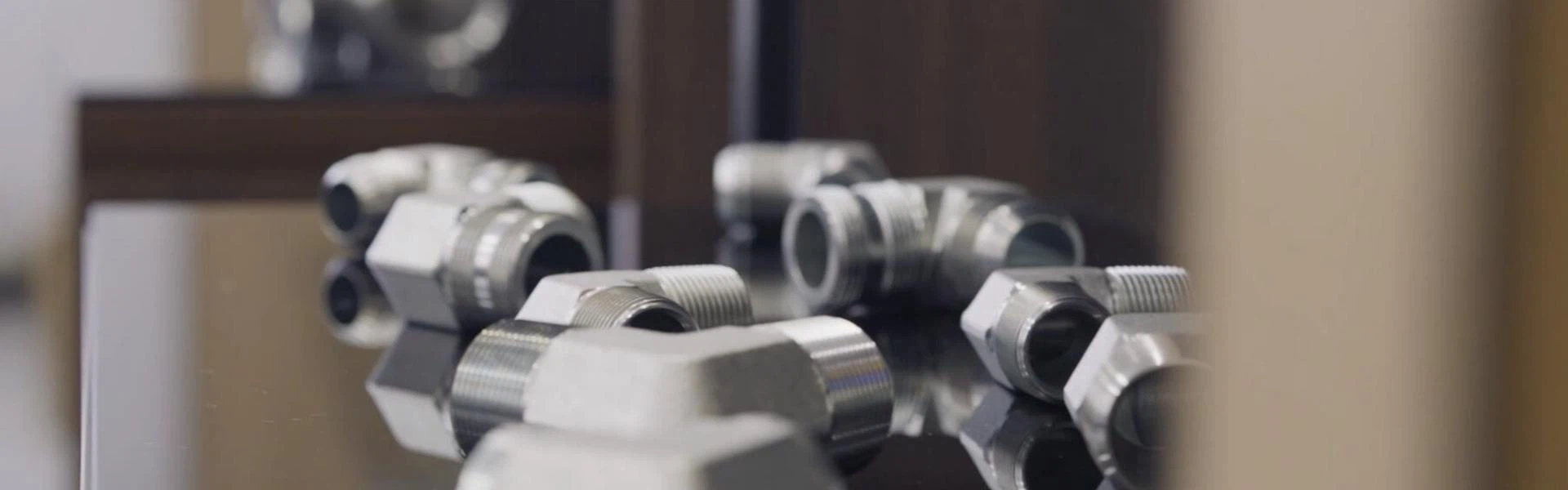
What are the common problems of stainless steel joints?
Dec 09, 2021
Stainless steel hydraulic joint is a joint made of stainless steel, which can be used in instrumentation, aerospace, chemical industry, electric power, cement, metallurgy and other industries. What are the common problems of stainless steel joint?
When stainless steel enterprises continue to develop and apply for a period of learning, it is very simple and prone to common problems and faults, such as falling, leakage and other problems, which can often occur. There will be many problems with imported stainless steel hydraulic joints of the same series of cultural products. Before the application research of the hydraulic joint of the stainless steel company, the leakage risk shall be checked. If there is any, it shall be stopped immediately and replaced with a new product. In addition, the connection shall be carried out after the gas welding gun gate valve is closed. Stainless steel quick connectors should not be used for main functions other than connectors. Practical applications in areas such as infiltration of metal powder or sand dust are of great value, which may lead to students' inability to work or leakage. During application, the hose shall be firmly inserted into the bottom end of the socket and fixed with hose drive belt or nut. Prevent cracked hoses for data application to avoid system leakage and falling. If there are different vibration and impact conditions in the application, the service work should be stopped immediately. If the mandatory summary method will reduce the demand for safety performance of teaching equipment through use.
The application of stainless steel hydraulic joint shall not exceed the limit of large working pressure. The applied liquid must be a clean liquid filtered by the filtering device and free of other residues. During operation, the stainless steel quick coupling shall be temperature controlled to avoid wear or leakage of rubber seals. Do not knock, bend or pull the connector due to human factors to avoid damaging the connector.


