What are the types of transition joints
Apr 11, 2024
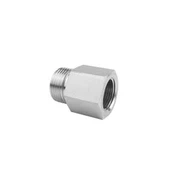
Transition joint is a commonly used connecting component in mechanical design, which can be used to transition between two pipes or components with different diameters or shapes to meet the connection requirements. Due to differences in diameter or shape between different components, transition joints typically have different interface forms. The function of transition joints is to ensure the connectivity and stability of the system.
Types of transition joints:
1. Concentric transition joint
A concentric transition joint is a joint where both ends of a transition component have the same central axis. It can connect and transfer fluids in pipes of different specifications. Concentric transition joints have the characteristics of low resistance and fast flow rate, and are mainly used in equipment with high flow rates.
2. Eccentric transition joint
The central axis of the two ends of the eccentric transition joint is not in the same plane, and it is the intersection point of the centerline of the pipeline where the two ends of the transition component are located. It can connect pipes of different diameters to achieve fluid transfer and transfer, with a slow speed, and is suitable for systems that require pressure reduction.
3. Transition joint for reducer
The transition joint of the reducer, also known as the expansion joint, is used to expand or reduce the radial size of the connecting pipeline and achieve the connection of two devices with different diameters through the connection of different shaped pipes of different diameters.