

What’s The Difference Between Fittings And Adapters?
Nov 09, 2021
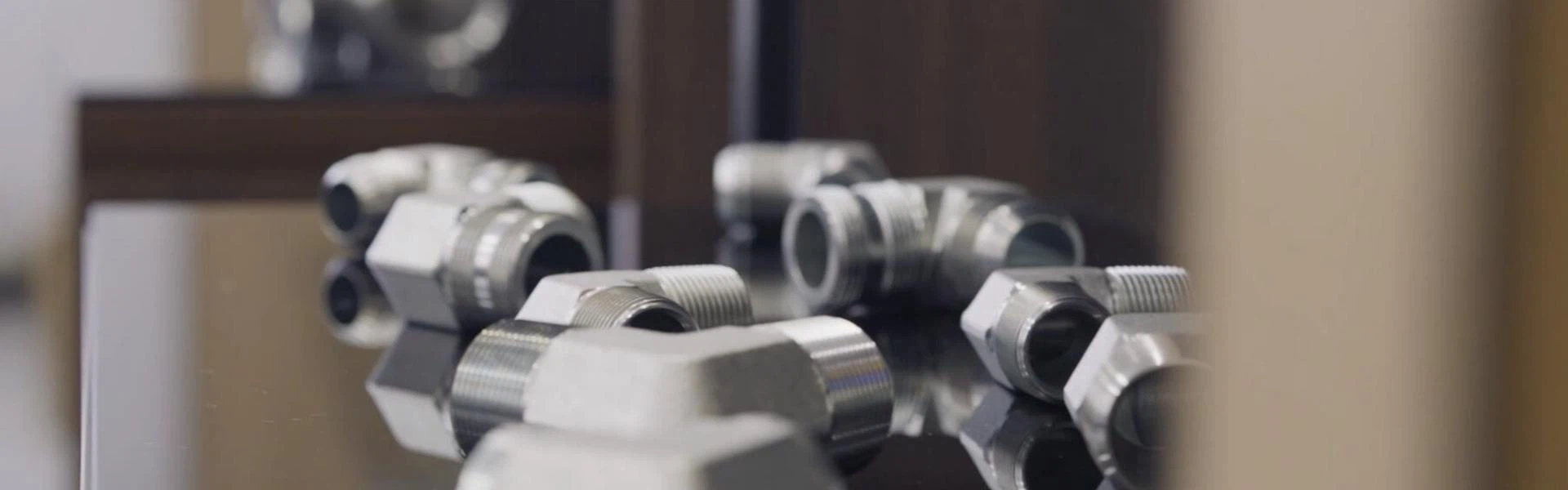
Hydraulic fittings and adapters are often assumed to be the same. Any given technician installing components during plumbing will tend to use the verbiage familiar to him or her and will use the words interchangeably.
Fittings install into other major components to allow plumbing of hoses and tubes that wouldn’t otherwise be possible. You install fittings into the work ports of pumps, motors, cylinders and valves to facilitate connection of tubes and hoses to these major components.
Fittings for hydraulic application are often made from forged and machined steel, which are extremely strong and rigid. Occasionally, fittings are machined from steel billet, although this is rare. The fitting will include a thread corresponding to the component’s port, but on the other end will include a thread corresponding to the hose end thread form.
Adapters are components manufactured to join two or more thread forms or sizes to one another. In some cases, adaptors may also be fittings. For example, if the ORB female cylinder port I spoke of earlier needed to attach to a female JIC hose end, the adapter fitting would be ORB male by JIC male. I should note, ORB adapters are almost always fittings, since their very nature defines a “boss” as a female port in a component.
Adapters provide creative solutions, as well. A hydraulic hose may have 1 in. JIC connections, so a run tee adapter with one end 1 in. JIC female, one end 1 in. JIC male and the third with ¼ in. JIC male will allow a test point or pressure gauge to be added inline to that section of plumbing.


