

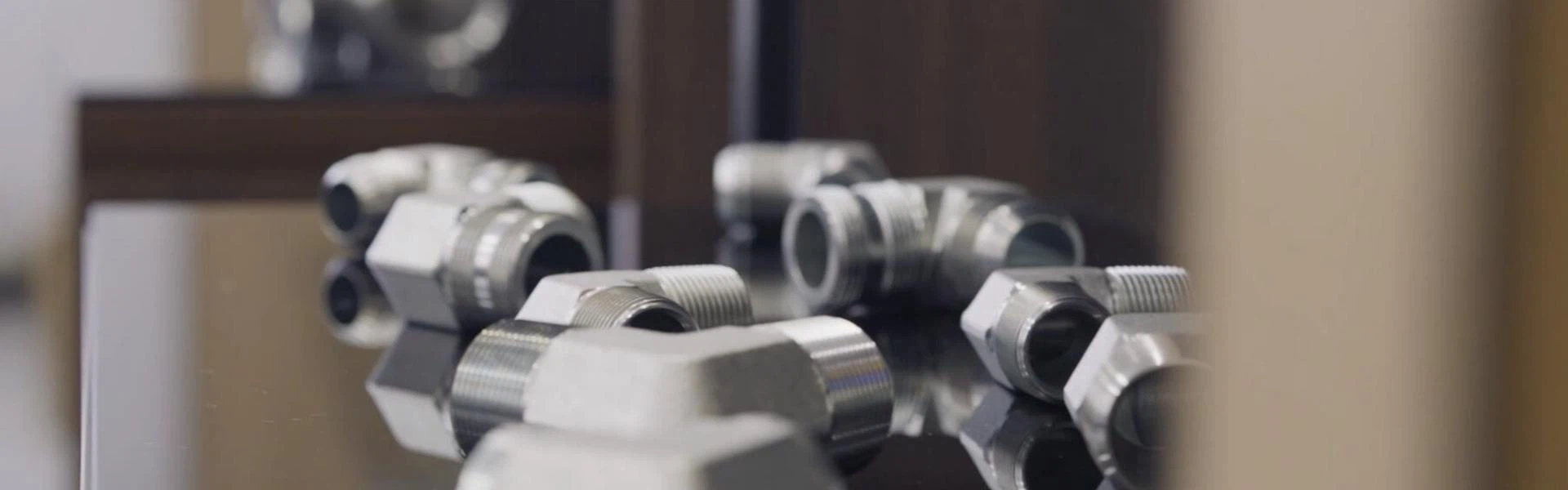
Structural features of hydraulic system of hydraulic joint
Jan 15, 2020
The hydraulic system of the hydraulic joint is simple in structure, flexible in layout, and good in self-lubrication of components, and is convenient to be combined with other transmission methods. Therefore, at present, it is widely used in most equipments of all kinds of enterprises. All key equipments such as electrolytic multifunctional cranes, casting machines and tilting mixing furnaces of our company use hydraulic transmission systems. The hydraulic system of the hydraulic joint is generally a closed pipeline circulation system. It is one of the main disadvantages of the hydraulic transmission that the hidden failure of the hydraulic system is difficult to find. Once the hydraulic system of the equipment fails, the cause of the failure should be determined as soon as possible and eliminated in time to reduce the economic loss caused by the equipment shutdown. Engineering and technical personnel need to rely on their own professional technical background, basic knowledge of hydraulic transmission, hydraulic joint component principle structure and basic circuit knowledge for fault analysis.
A complete hydraulic system consists of five parts, namely power components, actuators, control components, auxiliary components (accessories) and hydraulic oil.
The role of the power element is to convert the mechanical energy of the prime mover into the pressure energy of the liquid. It refers to the oil pump in the hydraulic system, which provides power to the entire hydraulic system. The structure of the hydraulic pump is generally gear pump, vane pump and plunger pump.
The function of the actuator (such as hydraulic cylinder and hydraulic motor) is to convert the pressure energy of the liquid into mechanical energy, and drive the load to perform linear reciprocating or rotary motion.
Control elements (ie, various hydraulic valves) control and regulate the pressure, flow, and direction of the liquid in the hydraulic system. According to different control functions, hydraulic valves can be divided into pressure control valves, flow control valves and directional control valves. Pressure control valves are further divided into flow control valves (relief valves), pressure reducing valves, sequence valves, pressure relays, etc .; flow control valves include throttle valves, regulating valves, diverter manifolds, etc .; directional control valves include check valves, Hydraulically controlled check valve, shuttle valve, directional valve, etc. According to different control methods, hydraulic valves can be divided into on-off control valves, fixed value control valves and proportional control valves.
Auxiliary components include oil tanks, oil filters, tubing and pipe joints, seals, quick-change joints, high-pressure ball valves, hose assemblies, pressure measuring joints, pressure gauges, oil level oil thermometers, and so on. Hydraulic oil is the working medium that transfers energy in the hydraulic system. There are various types of mineral oil, emulsion and synthetic hydraulic oil.


