

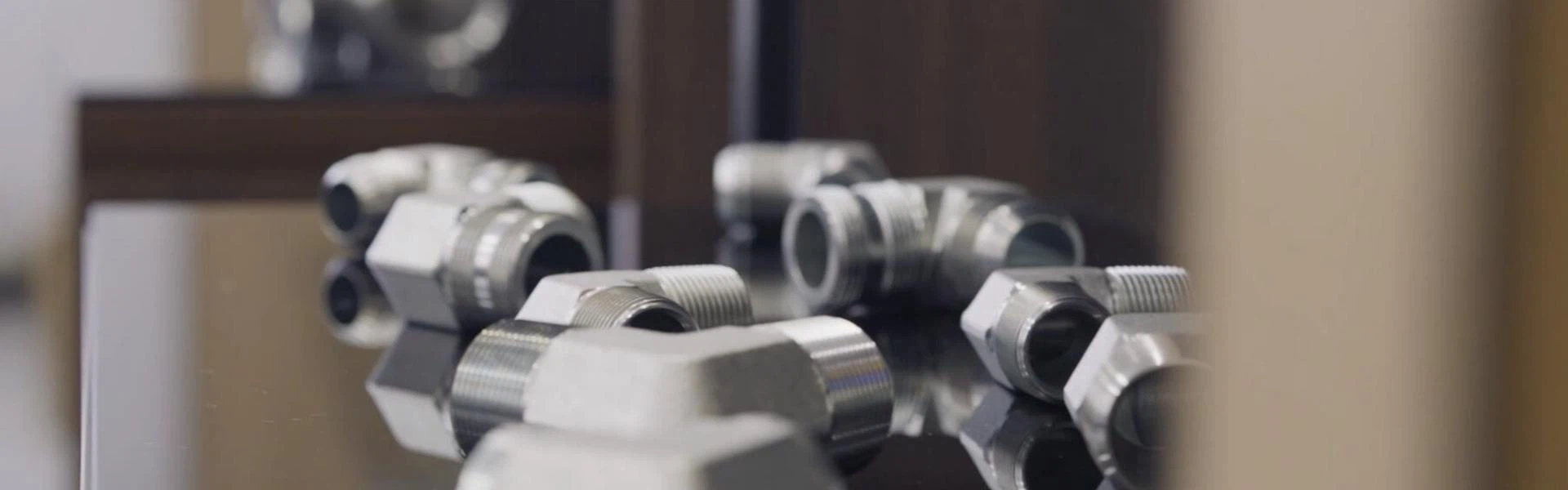
When Do Small Hydraulic Adapter Fittings Need to Be Replaced?
Apr 02, 2026
Every component has a finite service life; it is essential to monitor this lifespan and replace parts in a timely manner to prevent accidents and injuries. In the industrial sector, hydraulic adapter fittings are widely utilized as small, yet critical, components. However, in day-to-day operations, many people are unsure exactly when these small fittings require replacement. The following analysis aims to provide a focused guide on this subject.
1. Inspect the Environment Surrounding the Fitting
As is well known, hydraulic adapter fittings typically operate within a closed-loop system. If the hose adjacent to a fitting exhibits signs of fluid leakage, softening, cracking, or even scorching, the fitting-and likely the hose-must be replaced immediately to avert potential accidents. Furthermore, if the hose at the connection point shows signs of deformation, softening, corrosion, or similar issues, personnel must carefully assess whether a replacement is necessary.
2. Monitor the Service Duration of the Fitting
Although a fitting may appear to be merely a small component, its application in industrial settings is becoming increasingly widespread. We are also well aware that every single part possesses a specific service life; if this lifespan is exceeded without a timely replacement, it can cause damage to the machinery. In severe cases, this could even pose a threat to the safety and lives of factory workers. Therefore, during routine inspections, personnel must pay close attention to the service life of every component-including the hydraulic fittings.
Based on the information provided above, you should now have a basic understanding of when small hydraulic adapter fittings require replacement. While these fittings may be minor components, ensuring a safe and secure working environment requires designated personnel to conduct continuous, scheduled inspections of all parts, frequently reviewing their work to ensure no issues have been overlooked. Additionally, comprehensive maintenance protocols for these components must be established and strictly followed; the primary objective of this approach is to ensure that these parts remain functional and serviceable for the long term within their intended operational parameters.


